
Arusha National Park
Arusha national park is located in northern Tanzania, northeast of Arusha at a distance of 25kilometres east of Arusha, 58kilometers from Moshi, and 35 kilometers from Kilimanjaro International Airport and covers an area of about 552 square kilometers. It is nested at the foot hills of Mount Meru, Africa’s most beautiful Volcano, and the second tallest mountain in Tanzania after Mount Kilimanjaro, which is also the fifth highest peak in Africa.
This national park was founded in 1960 and initially referred to as the Ngurdoto Crater national park and over the years, it commonly became known as the diamond amid the shadows of the giants being famous for having the largest population of giraffes in Tanzania.
Arusha national park has a magnificent scenery and breathtaking views composed of the three distinct landscape types that is; the Meru crater funneling, Jekukumia River in the west, Ngurdoto crater in the South-East and the shallow alkaline Momela lakes in the north east.
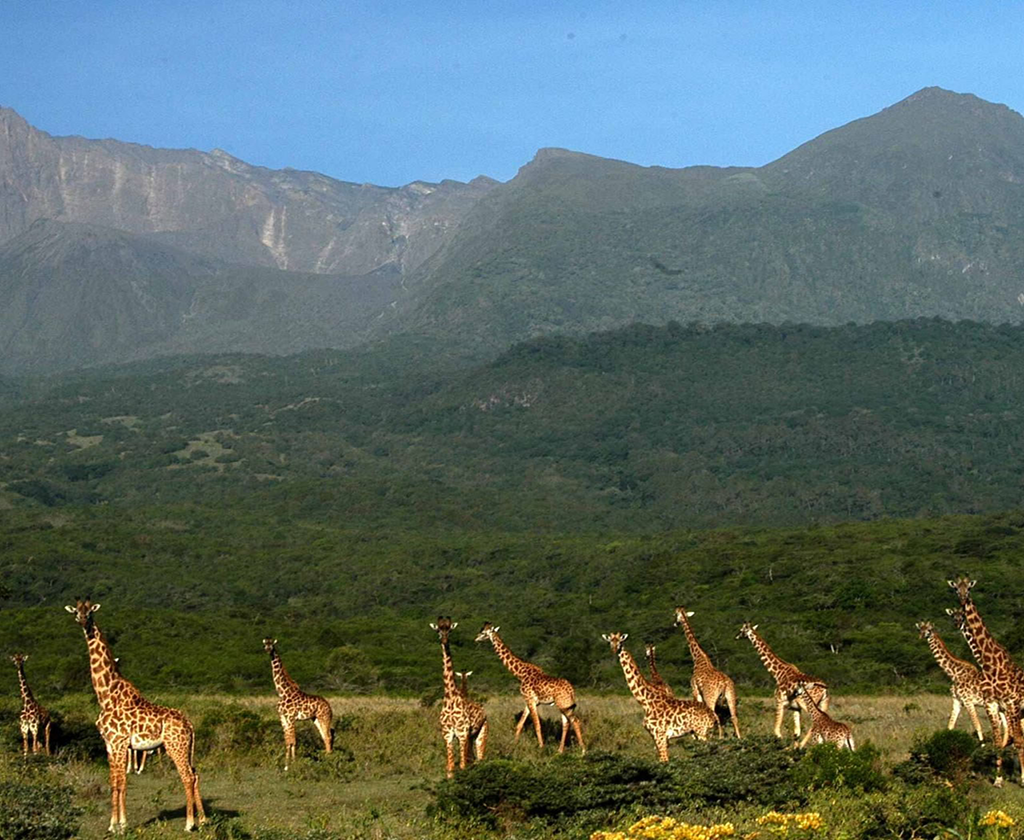 The vegetation cover of Arusha national park is composed of lush rainforest, savannah grassland, and alpine vegetation.
Arusha national park is home to a variety of wildlife species that include; buffaloes, bushbucks, warthogs, zebras, red duikers, elephants, giraffes, leopards, hippos as well as primates such as black and white colobus monkeys, blue monkeys, and vervet monkeys, among others. It is also home to a number of bird species such as the grey crowned crane, flamingos, African fish eagle, hartlaubs turaco, secretary birds, among others.
Arusha national park can be accessed by a 45 minutes’ drive from Arusha town. A safari to this destination can be combined with other national parks in northern Tanzania such as Serengeti National Park, Ngorongoro Conservation Area, Tarangire National Park, and Kilimanjaro National Park, among others.
Things to do in Arusha National Park
Game drives
Game drives are one of the mostly done activities in Arusha National Park. They are carried out through the different designated tracks within the park. Games drives can be done in the morning hours, afternoon, or in the evening hours and take about 4-hours a day. During these game drives, wildlife such as buffaloes, zebras, dik dik, bush pigs, leopards, red duikers, waterbucks, wild cats, reedbucks, and primates such as black and white colobus monkeys, blue monkeys, among others are spotted. Game drives in Arusha national park usually also lead travelers to the Momela lakes and Ngurdoto crater where they enjoy magnificent views of hippos and other animals on the shores of the lake.
Mount Meru Hike
Mount Meru is the second tallest mountain in Tanzania after Mount Kilimanjaro and it stands at an elevation of 4566 meters above sea level. This mountain was once taller but shortened due to the volcanic explosion that led to the formation of the crater at the peak of Mount Meru. The mount Meru hike takes you through the lower slopes of this mountain that has the Ngarenanyuki River, waterfalls, spectacular views of the ancient fig trees, water from the mountain streams, and the savannah grasslands. It’s a 3 to 4 hours hike to the summit. Once you summit Meru, its peak will give you rewarding views of the surrounding areas including the Kilimanjaro Mountain.
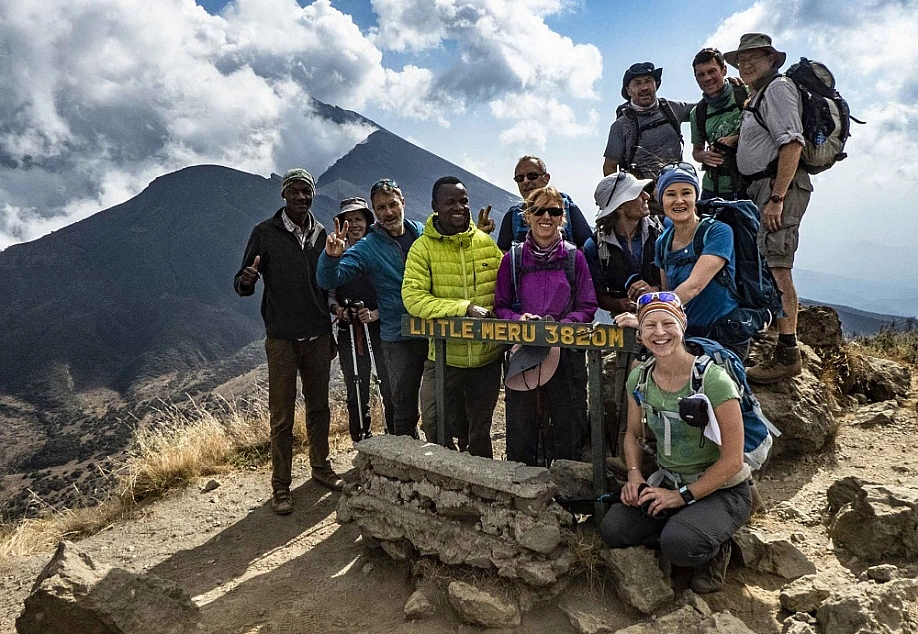 Guided Nature walk
This is one of the most done activities in Arusha National Park. Nature walks give tourists an opportunity to explore the park closely and intimately on foot. Arusha national park is a great destination for nature walk since it has fewer dangerous wildlife.
This nature walk takes you past the foot of Mount Meru, Ngurdoto crater, Kitoto to Njeku viewpoint, Momela gate to Ikikoni, Tululusia waterfall and the Ujambo wa mbogo area. Nature walks in Arusha national park are done in the company of an armed ranger guide for safety purposes. During the walk, you will enjoy the beautiful views of the landscapes and sceneries and sometimes spot a number of wildlife at a distance such as giraffes as well as a couple of birds in the sky or on the tree branches.
Bird watching
Arusha national park is home to over 400 bird species both migratory birds and endemic species including the pink flamingos hence it’s one of the best bird watching destinations in Tanzania. Birding in Arusha national park is done on the alkaline Momela lakes and in the forests. Bird species spotted in Arusha national park include greater flamingos, little grebes, spur winged goose, secretary birds, African fish eagle, bar tailed trogon, beard vulture, red fronted parrot, Egyptian goose, and African olive pigeon, among others.
Canoeing
Arusha National Park is one of the protected areas in Tanzania that offer amazing canoe rides. Canoeing in Arusha national park takes place on the Momela Lake and it’s done in the company of a well-trained canoe driver who rows the canoe across the lake. During the canoe ride, you will spot a number of wildlife as well as birds such as flamingos, pelicans, fish eagles at the lake shores and others in the lake such as hippos.
Horseback rides
This is another way of exploring the park. Horseback rides are done through the different trails in the park and during these you will spot a couple of wildlife such as giraffes, zebras, among others.
Best time to visit Arusha National Park
Arusha national park can be visited throughout the year. However, the best time to visit this park depends on the interest of the traveler. For a game viewing experience, the best time to visit this park is during the dry season that runs from June to October whereas for birding, the best time to visit Arusha national park is during the wet seasons during the months of November to April when the migratory birds from Europe and North America are in this area.
How to get to Arusha National Park
Arusha national park can be accessed both by road and by air.
By road, Arusha national park can be accessed using both public and private means. These public or private means of transport take you from Arusha through Ngare Nanyuki village to Ngongongare gate. This usually takes between 40 to 45 minutes.
By air, Arusha national park can be accessed by a flight from Julius Nyerere International Airport to Kilimanjaro International Airport or Arusha Airport.
Accommodation near Arusha National Park
While visiting Arusha national park there is a variety of accommodation to choose from ranging from campsites, budget accommodation, mid-range accommodation, and luxury accommodation. Campsites in Arusha national park include; Ngurdoto gate campsite, and Tulisia Hill campsite, among others. Budget accommodation include; Wayside Hotel, Christina House, among others. Mid-range accommodation include; Mvuli Hotel Arusha, L’Oasis Lodge and restaurant, Iiboru safari lodge, Moyoni lodge, Zawadi House, among others and Luxury accommodation include; Arusha Coffee lodge, Ngurdoto Mountain lodge, The African Tulip hotel, Lake Duluti Serena Hotel, Hatari lodge, among others.
Mount Meru
Mount Meru is a dominant stratovolcano located in southeast Arusha north of Arusha city and 70 kilometers west of Mount Kilimanjaro. It stands at a height of 4562.13 meters above sea level and is the fifth highest peak in Africa as well as the second highest mountain in Tanzania after the Kilimanjaro Mountain and its peak can be seen from mountain Kilimanjaro on a clear day.
Mount Meru has two peaks; that is the Meru peak which is the highest peak of the mountain and the Ash cone peak, which is an additional peak located inside the crater. Both these peaks can be accessed through only one hiking route- the Momella route that begins at the momella gate located on the eastern side of the mountain. This mountain can be hiked to its summit on either 3 or 4 days. The mount Meru hiking route comprises two huts for overnight stay that is the Miriakamba hut and the saddle hut.
The slopes of mount Meru have fertile lands that support the savanna vegetation and forests that hosts diverse wildlife such as giraffes, buffaloes, and elephants among others, over 400 bird species that include the crowned eagle, lanner falcon, levaillant’s cuckoo, among others as well as primates such as white colobus monkeys and baboons, among others.
Mount Meru climb offers magnificent views of Mountain Kilimanjaro, the Great Rift Valley, Kitumbeini and Gelai volcanoes, wildlife along the forested slopes, and the small cones and craters seen at the summit.
Formation of mount Meru
Mount Meru was formed millions of years ago as a result of a gigantic volcanic eruption giving the mountain a horseshoe shape. This mountain is still an active volcano with its last eruption having occurred in 1910.
Mount Meru was first summited in 1904 by Dr. Fitz Jaeger. The western slopes of this mountain is home to the famous Waarusha people, a Bantu ethnic group that are believed to be related to the Maasai who arrived in Arusha in the late 18th century. This tribe believes this place to be sacred and sacrifice a bull or a sheep every year in this place for the rains.